
Introduction:
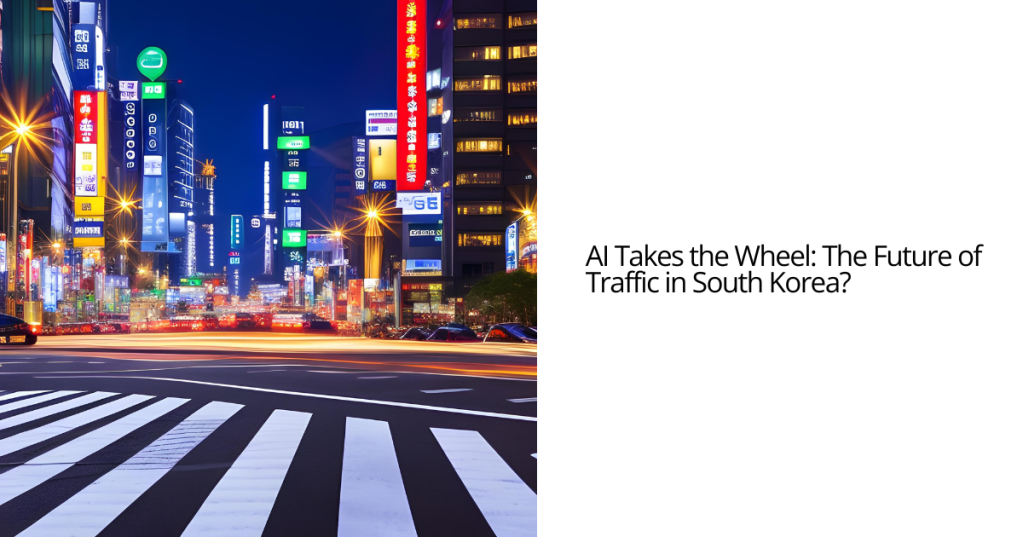
Picture this: It’s 3 AM. The streets of Seoul are virtually deserted. The glittering skyline towers above you while the city sleeps. You’re standing at an intersection, a pedestrian waiting for the light to change. Minutes pass, yet the signal remains stubbornly red.
Suddenly, the lights shift, giving you a narrow window of merely 10 seconds to cross. You step onto the asphalt, but a lingering injury slows your pace. Out of nowhere, a car barrels towards the intersection, its driver oblivious to your plight. The light is green for them, and they have no reason to expect your presence in the crosswalk.
Unfortunately, this isn’t a scene from a movie. It’s a genuine concern for many pedestrians navigating the highly automated yet sometimes frustratingly inflexible traffic system in South Korea.
Now, let’s pause and ask ourselves: What if things were different? What if, instead of relying on static timers, our traffic management systems could adapt in real-time? What if AI could be the key to smoother, safer streets, particularly in the late hours of the night?
Welcome to our latest series, the ‘What If’ series, where we delve into the intriguing possibilities of integrating AI into everyday scenarios. Today, we’re focusing on how General Artificial Intelligence (GAI) could revolutionize traffic management in South Korea, making our roads safer and more efficient. Stay with us as we journey through this AI-enhanced future, discussing its potential, exploring its impact, and facing the challenges head-on. Buckle up – it’s going to be an exciting ride!
The Problem:
When it comes to traffic management, especially in urban settings like South Korea, we’ve all had our share of frustrations. And these frustrations aren’t limited to the hours of the day when traffic is thick and chaos seems to reign supreme. Oddly enough, some of the most hair-raising issues crop up when the streets are virtually empty.
Consider the late-night scenario we opened with. Empty roads, stubborn traffic signals, and the hazardous combination of a pedestrian and an inattentive driver. The traditional traffic light system, primarily governed by timers, fails to adapt to the varying levels of road activity. So, you have situations where a pedestrian waits for several minutes at a deserted intersection, only to be granted a scant few seconds to cross when the signal finally changes.
Moreover, these circumstances aren’t just irritating—they can be dangerous. An impatient pedestrian might risk a dash across the road against the light, or a driver, assuming the roads are empty, might barrel through a green light without anticipating possible delays in the crosswalk. Both scenarios are accidents waiting to happen.
But what if there was a way to make traffic lights more than just mindless timers? What if they could observe, analyze, and respond to road conditions in real time? This brings us to our ‘What If’ premise: What if we could leverage AI to reinvent the way we manage traffic?
The AI Solution:
Imagine a world where traffic lights aren’t just timed machines, but smart systems equipped with the power of General Artificial Intelligence (GAI). These GAI-powered traffic lights would use a network of cameras and sensors to constantly observe and analyze the traffic situation, both vehicular and pedestrian. They wouldn’t just count down a set amount of time. They would consider the actual conditions on the ground.
In the quiet hours of the night, the AI would recognize that there’s only one pedestrian waiting to cross the road and no cars in sight. Instead of making the pedestrian wait needlessly, it would immediately give the go-ahead for the person to cross. Conversely, if the AI detected a pedestrian who was injured and moving slowly, it would ensure they had enough time to safely cross, regardless of the programmed timer.
This wouldn’t just be beneficial for pedestrians. For drivers too, AI can make adjustments to traffic light patterns based on the density and flow of traffic. Traffic congestion could be eased by manipulating green light durations to facilitate the smooth passage of vehicles, reducing delays, and making your drive more predictable.
This is the vision we dream of when we think about combining AI with traffic management. But how far are we from turning this vision into reality? Let’s delve into that next.
The Road to Reality:
While our dream of AI-managed traffic systems may sound like a scene from a futuristic movie, the truth is, we aren’t far from making it a reality. Cities around the globe are already exploring and experimenting with AI to solve their traffic woes. Technologies like machine learning, predictive modeling, and real-time data analysis are being employed to optimize traffic signals and improve pedestrian safety.
Let’s take a look at some real-world examples. In Pittsburgh, USA, an AI system called Surtrac has been installed at several intersections. Surtrac optimizes traffic signals in real-time based on the current traffic situation, resulting in reduced wait times and less traffic congestion.
In Hangzhou, China, an AI-powered “City Brain” has been developed, which analyzes real-time data from various sources like GPS tracking, road cameras, and social media to predict and manage traffic flow. It’s reportedly reduced traffic congestion by around 15%.
Despite these advancements, the integration of AI in traffic systems is still in its infancy, especially when we consider our goal of fully GAI-powered traffic lights. There are challenges to be faced, such as the complexity of real-world scenarios, the need for extensive data collection, privacy concerns, and the requirement of significant investments. Yet, these obstacles are not insurmountable, and with focused effort and technological advancements, the day we see our dream come to life might not be far off.
But what would this mean for South Korea, and for cities around the world grappling with similar traffic management issues? Let’s discuss that next.
Bringing AI to South Korean Traffic Lights:
Imagine this – You’re back at that same traffic light at 3 am, but this time, the scenario is different. The moment you approach the intersection, the traffic light, equipped with AI, detects your presence. It knows there’s no oncoming traffic, so it instantly changes to green, giving you ample time to cross the road. The drunk driver coming down the road? The AI system has already recognized the erratic driving pattern and flashes a warning sign, or better yet, communicates with the driver’s smart car to slow down.
So, how could this transformation be made possible? The first step would be to upgrade the existing camera systems and traffic lights with AI capabilities. By using computer vision and machine learning algorithms, the AI system could monitor the roads and intersections in real-time, identify vehicles, pedestrians, and understand traffic patterns.
Secondly, the AI system would need a way to make decisions based on what it sees. If a pedestrian is waiting to cross, and there’s no oncoming traffic, it should be able to change the lights. For complex scenarios, it could use predictive modeling to anticipate possible situations and act accordingly.
Lastly, and most importantly, such an AI system needs to be robust and reliable. Any malfunction could lead to traffic chaos, or worse, accidents. Therefore, extensive testing and constant monitoring would be vital to ensure its smooth operation.
AI-powered traffic systems have the potential to revolutionize traffic management in South Korea and beyond. It’s not just about reducing traffic congestion and wait times, but about making our roads safer and more efficient. It’s about transforming our city lives.
Addressing Potential Concerns:
Imagine the futuristic scene – traffic lights with eyes, watching, learning, and making decisions in real-time. It’s awe-inspiring but also a tad overwhelming, right? Now, let’s buckle up and navigate through the potential speed bumps on this high-tech highway.
Privacy is the first significant roadblock. The idea of cameras monitoring every vehicle, pedestrian, and street corner brings a cyberpunk-ish feel to our reality. We must ensure these ‘eyes on the road’ respect our ‘right to privacy’. Therefore, implementing this tech calls for strong, non-negotiable privacy laws to reassure citizens they’re not part of an Orwellian novel.
Then, we’ve got the ‘fear of AI domination’. It’s only human to worry about what happens if the machines fail us. “What if the AI has a glitch and causes an accident?”, “What if it gets hacked?” These are valid concerns, and we should tackle them head-on with stringent safety measures, robust redundancy systems, and constant monitoring. It’s like having a spare tire in the trunk; it gives you confidence on the road.
And yes, we can’t dodge the ‘money’ pothole. Advanced technology often comes with a hefty price tag. However, it’s essential to remember – we’re investing in safer streets, smoother drives, and precious time saved from being stuck in traffic. Can we really put a price tag on the potential lives saved and the countless hours spared from traffic jams? In the end, AI is like the new kid on the block – full of potential, but it needs guidance.
Conclusion:
In conclusion, the path to integrating AI in our traffic systems may seem like a complex maze of interchanges. And that’s because it is! The fusion of technology with our everyday lives is not a simple undertaking. It’s like learning to drive a car – a challenging endeavor, but worth the effort for the freedom it brings.
There are certainly concerns that we cannot overlook – the privacy debates, the need for foolproof safety systems, and the ever-looming fear of AI going rogue. But, isn’t this the case with every innovative solution we’ve adopted in the past? Think about it – there was a time when automobiles themselves were a novelty, a cause for skepticism, even fear. Look at us now, we can’t imagine our world without them!
AI can be the game-changer we need to unclog our traffic arteries. It can help create a safer, more efficient, and less frustrating driving environment. Imagine, no more waiting at empty intersections, no more needless traffic build-ups, and most importantly, significantly reduced chances of accidents. A world where you can trust the green light and cross the road with the confidence that you won’t be bowled over by a rogue driver.
The prospect of such a reality is exciting, and it’s closer than we think! However, it’s important for us to navigate this journey with our eyes wide open, questioning, learning, and improving. We need to work together to shape this technology to our advantage, to create a world where technology is no longer a source of fear, but a beacon of hope and a facilitator of ease.
With each “What If?” we ask and answer, we are building that future, one blog post at a time. So, keep questioning, keep commenting, and keep dreaming. The road to a safer, smarter world is paved with your insights and our collective effort. Buckle up, folks. We’re just getting started.
In the comments below, share your thoughts on this topic. Do you think AI can solve our traffic woes? What concerns do you have? And if you enjoyed reading, don’t forget to like, share, and subscribe for more insightful discussions in our “What If” series!
 Subi's Insights
Leave a comment