
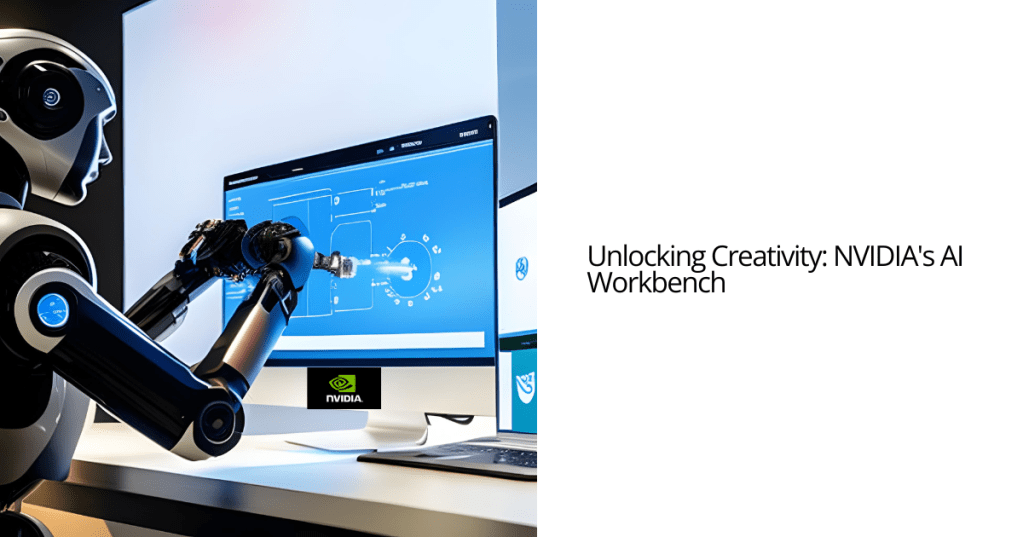
Earlier this week, NVIDIA unleashed a wave of excitement in the tech world with the announcement of their AI Workbench, a tool that promises to revolutionize the way we approach generative AI model creation NVIDIA AI Workbench Announcement. The buzz is everywhere, but what does it mean for people on the ground? What does it mean for someone like you, or like me?
Let me take you into my world. Imagine the excitement of conceptualizing your very own chatbot, the anticipation as you begin to work on training it using the gpt2 model, only to hit the wall of hardware limitations. Picture yourself working tirelessly on a laptop that is far from capable of handling the extensive training required to make your dream a reality. That’s been my journey, filled with hope, passion, and yes, frustration.
But the announcement of NVIDIA’s AI Workbench might just be the game-changer I’ve been waiting for. Could this tool be the key to unlocking the door that seemed impenetrable due to my hardware constraints? Or is it merely a tantalizing mirage, a promise that sounds too good to be true? How much of a game-changer is it really?
If you’ve ever wrestled with technological barriers or if you’re just fascinated by the ever-changing landscape of AI, come with me as I break down this latest innovation, explore what it might mean for developers like us, and offer a critical analysis of its potential impact. Here’s my breakdown:
The Excitement: Revolutionizing AI Development
1. Simplifying the Complex:
- What It Means: The unified toolkit offered by NVIDIA AI Workbench aims to streamline the creation, testing, and customization of generative AI models. For developers like me, who are working on intricate projects such as a language learning storytelling app, the platform’s accessibility is game-changing.
- Pros: This simplification can reduce the entry barriers for newcomers and facilitate faster innovation.
- Cons: However, oversimplification might limit advanced customization options for seasoned professionals.
- Personal Takeaway: The ability to focus more on the creative aspect without getting bogged down by complexities can be a breath of fresh air in my AI journey.
2. Local to Global Scalability:
- What It Means: Imagine beginning an AI project on your humble laptop and then effortlessly scaling it to a sprawling data center. This feature has been a dream of mine as I grappled with my laptop’s limitations in training my chatbot using the gpt2 model.
- Pros: This scalability offers an unprecedented level of flexibility and adaptability for developers, regardless of the size of their operations.
- Cons: It could potentially introduce issues with security and control over data as projects move to a larger scale.
- Personal Takeaway: The possibility of taking my ideas from concept to global deployment is tantalizing and exactly what I’ve been yearning for.
3. Democratizing AI Development:
- What It Means: NVIDIA’s collaboration with industry giants and integration across platforms aims to foster an inclusive AI development ecosystem. This is more than corporate jargon; it’s a fundamental shift.
- Pros: By bridging the gap between small enterprises and big players, it opens doors for more diverse innovation.
- Cons: The risk here could be a lack of standardization or quality control as AI development spreads wide.
- Personal Takeaway: As an individual developer, this inclusivity paves the way for my voice to be heard in the industry.
4. Customization at Fingertips:
- What It Means: Being able to tweak existing models to specific needs offers a whole new playground for innovation and experimentation.
- Pros: This flexibility empowers developers to bring unique visions to life without starting from scratch.
- Cons: On the flip side, too much customization without guidance could lead to inconsistency and divergence from best practices.
- Personal Takeaway: This feature speaks directly to my longing for creative freedom in my AI journey, allowing me to craft models that resonate with my unique perspective.
The Analysis: A Closer Look
While NVIDIA’s AI Workbench is a game-changer in many ways, it’s essential to approach this advancement with a balanced perspective. Here’s a detailed examination:
- Overreliance on Pretrained Models:What It Means: The AI Workbench allows customization of existing models, but could this lead to a culture of remixing rather than creating from the ground up? Pros: Leveraging pretrained models can drastically reduce development time, allowing more room for creativity in specific applications. Cons: The concern here is that this might stifle genuine innovation. Will we lose the raw creativity and originality that come with building models from scratch? Personal Takeaway: As a developer who values both efficiency and creativity, I find this aspect both intriguing and concerning. It’s a tightrope walk between efficiency and originality.
- Accessibility Issues:What It Means: Despite the intention to make AI development more accessible, the hardware requirements might still present barriers. Pros: By targeting NVIDIA RTX™ PCs or workstations, AI Workbench ensures a level of quality and performance. Cons: However, this means that the barrier to entry might still be high for those lacking the necessary hardware, something I’ve faced personally with my laptop limitations. Personal Takeaway: The balance between accessibility and performance is always tricky, and this scenario emphasizes the need for a solution that caters to different levels of users.
- Potential Security Concerns:What It Means: The unified nature of AI Workbench could potentially lead to security vulnerabilities. Pros: Unifying tools and frameworks can create a more efficient and streamlined development process. Cons: The downside is the potential for new security risks. Ensuring data integrity and privacy as it moves across platforms becomes a major challenge. Personal Takeaway: As someone deeply involved in AI development, the potential security implications are a reminder of the ever-present need for vigilance and robust security measures.
- Cost Implications:What It Means: Starting small and scaling up may seem cost-effective, but hidden costs might lurk in the shadows. Pros: The flexibility to scale projects according to needs is a remarkable advancement and something I’ve been longing for in my own work. Cons: But the reality is that scaling to data centers or cloud resources might reveal unexpected costs, posing financial challenges for individual developers and small enterprises. Personal Takeaway: This point underscores the importance of transparency and careful planning in AI projects. It’s a reminder that scalability should not be viewed only through the lens of convenience but also cost-efficiency.
The unveiling of NVIDIA’s AI Workbench has undoubtedly made waves in the AI community, offering exciting possibilities and potential pitfalls. By weighing the pros and cons, developers like me can make informed decisions on how best to leverage this new toolkit, embracing the innovation while being mindful of the potential challenges.
My Verdict
NVIDIA AI Workbench marks a thrilling yet thoughtful stride into the next frontier of AI development. As someone who has longed for such innovation, personally grappling with hardware limitations and nurturing dreams of unique AI projects, the announcement resonates deeply with me. This is the future I’ve been waiting for, and it’s finally here.
But let’s not be swept away entirely by the excitement. While these advancements are indeed game-changing, they don’t come without their challenges. Issues ranging from overreliance on pretrained models to potential hidden costs remind us that innovation is rarely without its complexities.
The real triumph of AI Workbench will be determined not merely by its impressive features but by how NVIDIA navigates these intricate waters, and how developers like you and me adapt to this new reality.
Engage with Us
As we wrap up this exploration of NVIDIA’s groundbreaking AI Workbench and the astonishing potential it offers to developers like me and the AI community at large, I can’t help but buzz with curiosity about your take. Do you see this platform as a paradigm-shifting tool opening up new horizons? Or are you more cautious, mindful of the criticisms, and attentive to potential challenges?
Jump into the comments below, and let’s ignite a dialogue that’s as diverse and dynamic as the field of AI itself!
If this post sparked your intellect and fired your imagination, don’t hesitate to hit that like button, follow, and subscribe for more in-depth looks at the thrilling intersection of AI and technology. Your support is not merely appreciated – it’s vital fuel for this journey into the future of artificial intelligence, and it’s all profoundly valued!
For those charged by today’s insights, you may find my previous explorations (found here) into the world of AI just as compelling. I’ve also opened up a limited-time opportunity: free AI-powered consulting on tech innovations, found here. If you’re hungry to harness the transformative energy of AI or merely wish to uncover more, don’t hesitate to reach out.
Feeling as exhilarated as I am about this new chapter in technological innovation? Dive into the original article if you wish to explore further. Your voice and perspective are crucial as we navigate this exciting, complex landscape. So, as always, innovate wisely, remain curious, and tech on! 🚀
 Subi's Insights
Leave a comment