

Introduction
Welcome to the exciting world of language learning with ChatGPT! In this digital era, the way we learn languages is evolving rapidly, and artificial intelligence, particularly generative AI models like ChatGPT, is at the forefront of this revolution. ChatGPT, developed by OpenAI, is a powerful language model that can understand and generate human-like text, making it an invaluable tool for language learners.
What sets ChatGPT apart is its ability to interact in a conversational manner. This not only aids in understanding language nuances but also provides a practical and engaging learning experience. Whether you are a beginner looking to grasp the basics or an advanced learner aiming to refine your skills, ChatGPT can cater to your needs. It’s like having a personal language tutor available at your fingertips, one that can answer your queries, help you practice conversation, and even assist in understanding complex grammatical structures.
However, the effectiveness of ChatGPT in language learning largely depends on how we communicate with it. This is where the concept of prompt engineering comes into play. Prompt engineering is the art of crafting questions or commands to elicit the most informative, accurate, and useful responses from an AI model. By learning to frame your prompts effectively, you can guide ChatGPT to provide responses that are more aligned with your language learning objectives.
For instance, a beginner might use simple prompts like “Translate ‘hello’ to Spanish” or “How do I introduce myself in French?”. In contrast, an advanced learner could use more complex prompts such as “Give me an example of the subjunctive mood in German” or “Explain the difference between ‘ser’ and ‘estar’ in Spanish with examples.” The way you phrase your questions can significantly influence the kind of response you get, making prompt engineering a crucial skill in maximizing ChatGPT’s potential for language learning.
In this blog, we’ll dive deeper into how you can leverage ChatGPT’s capabilities at different stages of your language learning journey, focusing on the essential prompts that can facilitate your learning process. So, whether you’re just starting out or looking to polish your language prowess, get ready to unlock the full potential of language learning with ChatGPT!
Understanding Prompt Engineering in Language Learning
What is Prompt Engineering?
Prompt engineering, in the context of using AI like ChatGPT, involves designing and framing questions or statements in a way that guides the AI to generate the most effective and relevant responses. It’s a bit like having a conversation where you carefully choose your words to steer the discussion in a direction that best serves your purpose. In language learning, this means crafting prompts that not only elicit correct language use but also encourage the AI to provide responses that are pedagogically valuable.
The Relevance of Prompt Engineering to ChatGPT
When it comes to ChatGPT, prompt engineering becomes particularly crucial. ChatGPT’s responses are based on the input it receives. The more precise and thoughtful your prompts are, the more likely you are to receive helpful responses. For language learners, this means using prompts that are not just about getting the right answer, but also about understanding the why and how of language usage.
For example, instead of simply asking ChatGPT to translate a phrase, you could ask it to use the phrase in different sentences, explain any cultural nuances associated with it, or even compare it to similar phrases in other languages. This level of detail in your prompts can turn a simple translation task into a comprehensive language lesson.
Catering to Different Aspects of Language Learning
The beauty of prompt engineering in language learning is its versatility. Different prompts can cater to different aspects of learning a language. Here are a few examples:
- Vocabulary Acquisition: You can ask ChatGPT to provide synonyms, antonyms, or use new words in sentences, enhancing your vocabulary through context.
- Grammar Practice: By asking ChatGPT to correct wrongly structured sentences or explain complex grammatical rules, you can improve your grammatical understanding and accuracy.
- Conversational Skills: Engaging in simulated conversations or role-play scenarios with ChatGPT can boost your confidence and fluency in using the language in real-life situations.
- Cultural Competence: Prompts asking about idiomatic expressions, slang, or cultural references can enrich your understanding of the language within its cultural context.
- Listening and Comprehension: You can ask ChatGPT to generate short stories or dialogues, which you can then use to practice listening and comprehension skills.
- Writing Skills: Requesting feedback on written pieces or asking for writing prompts can help refine your writing skills in the target language.
By strategically using prompt engineering, language learners can transform their interactions with ChatGPT into a dynamic, personalized learning experience. It’s about asking the right questions in the right way to unlock the full educational potential of this advanced AI tool.
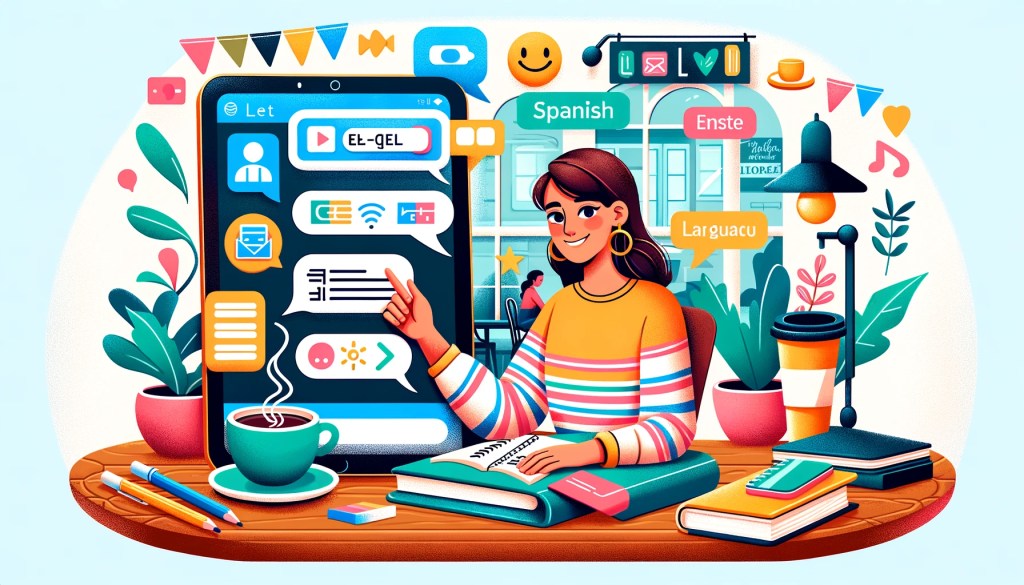
Essential ChatGPT Prompts for Beginner Language Learners
Embarking on the journey of learning a new language can be both exciting and daunting. For beginners, the key is to start with the basics. ChatGPT can be an excellent ally in this early stage, helping to lay a strong foundation in the new language. Here are some essential prompts that beginners can use to maximize their learning experience with ChatGPT.
Basic Conversation Starters
- Greetings: Ask ChatGPT to teach you common greetings in your target language. For example, “How do I say ‘hello’ in Italian during different times of the day?”
- Self-Introduction: Learn to introduce yourself. Prompt ChatGPT with, “Can you help me write a self-introduction in Japanese?”
- Common Phrases: Get familiar with everyday phrases. Try prompts like, “What are some common phrases in German used in a supermarket?”
Vocabulary Building
- Simple Word Translation: Start building your vocabulary by asking for translations of everyday words. For instance, “What is the Spanish word for ‘apple’?”
- Usage in Sentences: Understand how these words fit into sentences. A good prompt could be, “Can you use ‘libro’ (book) in a simple Spanish sentence?”
Basic Grammar Practice
- Correcting Simple Sentences: Test your skills and understanding. You could say, “I wrote this sentence in French. Can you check if it’s correct?”
- Forming Questions: Learn to ask questions. A helpful prompt might be, “Show me how to form basic questions in Portuguese about the weather.”
These prompts are designed to guide ChatGPT in providing responses that are not only informative but also conducive to building a strong foundational understanding of the language. As you grow more comfortable with these basics, you’ll find it easier to progress to more complex language concepts.

Advancing with Intermediate-Level Prompts
As language learners progress to the intermediate level, the focus shifts from basic understanding to enhancing fluency and grasping more complex aspects of the language. At this stage, ChatGPT can be used to challenge and refine your language skills further. Here are some intermediate-level prompts that can help deepen your language proficiency.
Conversational Practice
- Role-Play Scenarios: Engage in more complex interactions. You might use prompts like, “Let’s role-play a job interview in Spanish. I’ll be the interviewee.”
- Describing Experiences: Practice describing past events or future plans. Try prompts such as, “How would I describe my last vacation in French?”
Grammar and Vocabulary Expansion
- Complex Sentence Structures: Understand and use advanced grammar. A suitable prompt could be, “Can you explain how to use conditional sentences in German?”
- Idioms and Phrasal Verbs: Dive into more nuanced language aspects. Ask ChatGPT, “What are some common English idioms related to emotions, and how are they used?”
Cultural Insights
- Culture-Specific Expressions: Learn phrases with cultural significance. A prompt here could be, “What are some Italian expressions that don’t translate directly into English, and what do they mean?”
- Contextual Usage: Understand when and how to use certain phrases. For instance, “In what situations would I use the French phrase ‘Ça ne fait rien’, and what does it convey?”
These prompts are tailored to push the boundaries of your language skills, encouraging you to think more deeply and use the language more flexibly. With ChatGPT’s help, you can explore intricate aspects of language and culture that are crucial at the intermediate level.
Mastering with Advanced-Level Prompts
At the advanced level, language learners aim to refine their proficiency to a near-native level, delving into complex conversations, nuanced grammar, and the rich literary aspects of the language. ChatGPT can be a sophisticated tool for this level of mastery, providing opportunities to explore and practice advanced language concepts. Here are some key prompts that can benefit advanced language learners.
Advanced Conversation and Debate
- Discussing Complex Topics: Engage in in-depth discussions. Use prompts like, “Let’s discuss the impact of technology on society in Mandarin. I’ll present my views first.”
- Expressing Opinions: Hone your persuasive skills. Try prompts such as, “What are some arguments for and against environmental policies in Spanish?”
Nuanced Grammar Usage
- Subjunctive Moods: Grasp the subtleties of mood in grammar. A prompt could be, “Provide examples of the subjunctive mood in Italian in different contexts.”
- Conditional Sentences: Master complex conditionals. You might ask, “Can you explain the different types of conditional sentences in French with examples?”
Literary Exploration
- Understanding Proverbs: Dive into the wisdom of proverbs. Use prompts like, “Explain the meaning and usage of this Russian proverb.”
- Famous Quotes and Their Interpretations: Analyze literary quotations. A suitable prompt could be, “Discuss the interpretation of this famous quote from Goethe in its original German context.”
These prompts are designed to challenge advanced learners, encouraging them to engage with the language at a higher cognitive level. This approach not only deepens linguistic competence but also enhances cultural and literary understanding, which are crucial components of true language mastery.
Customizing Prompts for Specific Language Goals
As language learners become more proficient, they often have specific goals or areas they want to focus on, such as improving speaking, writing, reading, or listening skills, or learning language for specific contexts like business or academia. ChatGPT can be an excellent resource for these specialized needs. Let’s look at how to tailor prompts to target specific language skills and contexts.
Focusing on Speaking Skills
- Imitation Exercises: Practice pronunciation and intonation by asking, “Can you provide a dialogue in Spanish for me to practice mimicking the pronunciation?”
- Spontaneous Speaking: Improve fluency with prompts like, “Give me a random topic to talk about in Italian for two minutes.”
Enhancing Writing Skills
- Writing Prompts: For creative writing practice, ask, “Can you give me a creative writing prompt in French?”
- Editing and Feedback: Improve writing accuracy and style with, “I’ve written a short essay in Japanese. Can you provide feedback and corrections?”
Improving Reading Comprehension
- Reading Passages: Request reading material with, “Provide a short story in German at an intermediate level for reading practice.”
- Comprehension Questions: After reading, ask, “Can you ask me questions about the story to test my comprehension?”
Developing Listening Skills
- Audio Transcription: Enhance listening by asking, “Can you write a dialogue in Portuguese that I can use to practice transcribing spoken words?”
- Listening and Summarizing: Request, “Please create a conversation or a speech in Russian for me to listen to and summarize.”
Specialized Language Contexts
- Business Language: For professional language use, try, “What are common phrases used in English business meetings?”
- Academic Writing: For academic contexts, ask, “Can you explain how to structure a research paper in Spanish, including specific academic vocabulary?”
These tailored prompts allow learners to focus on specific aspects of their language development, catering to their unique goals and contexts. By using ChatGPT in this targeted manner, learners can make significant strides in their language proficiency.
Overcoming Common Challenges with ChatGPT
While ChatGPT is a powerful tool for language learning, users may encounter certain challenges such as dealing with language nuances, dialects, regional variations, and handling misunderstood prompts or unexpected responses. Here’s how to navigate these challenges effectively.
Addressing Language Nuances, Dialects, and Regional Variations
- Specificity in Prompts: When dealing with dialects or regional language variations, be specific in your prompts. For example, “Can you show me how to say ‘Good morning’ in the Andalusian dialect of Spanish?”
- Exploring Nuances: To understand nuances in language, ask ChatGPT for explanations. Try, “What are the subtle differences in tone and formality when using ‘vous’ and ‘tu’ in French?”
Dealing with Misunderstood Prompts or Unexpected Responses
- Clarifying Misunderstandings: If ChatGPT misinterprets your prompt, clarify with more detail. For instance, “I meant to ask about informal greetings in German, not formal ones. Can you provide some examples?”
- Handling Unexpected Responses: Sometimes, ChatGPT might provide an unexpected or off-target response. Use this as a learning opportunity by asking follow-up questions, like “Why might this response be considered informal in Japanese culture?”
Additional Strategies
- Reflective Learning: Use any misunderstandings or unexpected answers as a chance to learn more about the language and AI interactions. Ask follow-up questions to delve deeper into the topic.
- Feedback to the AI: Provide feedback to ChatGPT about the responses. This not only helps in your learning process but also contributes to the improvement of AI models.
By understanding how to effectively navigate these challenges, language learners can make the most out of their interactions with ChatGPT, turning potential obstacles into opportunities for deeper learning.

Future of Language Learning with AI and ChatGPT
The integration of AI in language learning, especially through tools like ChatGPT, is just the beginning of a transformative journey. The future holds immense potential for even more personalized, efficient, and interactive language learning experiences. Let’s explore some predictions and possibilities in this rapidly evolving field.
Predictions on AI Advancements in Language Learning
- Enhanced Personalization: Future AI models are expected to offer more personalized learning experiences, adapting to individual learners’ proficiency levels, learning styles, and preferences.
- Improved Contextual Understanding: AI will likely become more adept at understanding and responding to cultural contexts and nuances in language, providing learners with a more nuanced understanding of the language.
- Advanced Interactive Experiences: We may see AI-powered language learning platforms that offer highly interactive experiences, such as virtual reality (VR) environments for immersive language practice.
Potential for Personalized Learning Experiences
- Tailored Learning Paths: AI could create customized learning paths for each user, dynamically adjusting the curriculum based on their progress and areas of interest.
- Real-Time Feedback and Correction: The potential for AI to provide real-time feedback on pronunciation, grammar, and usage will greatly enhance the learning process.
- Integration with Daily Life: AI language tools could become more integrated into everyday life, offering on-the-go learning and practice opportunities, like conversational practice with AI in real-world scenarios.
Real-Time Language Assistance
- Instant Translation and Interpretation: AI advancements may lead to more accurate and instantaneous translation and interpretation services, breaking down language barriers in real-time communication.
- Cultural Contextualization: Future AI models might provide instant cultural notes and explanations, aiding learners to not just understand the language but also the cultural context behind expressions and idioms.
- Adaptive Learning Environments: Imagine AI environments that adapt to your learning needs in real-time, providing resources, exercises, and practice scenarios based on your current interactions and performance.
The future of language learning with AI and ChatGPT is poised to be exciting and groundbreaking, offering possibilities that could redefine how we learn and interact with languages. This evolution promises a more connected and linguistically diverse world, where language learning is accessible, engaging, and deeply integrated into our daily lives.
Conclusion
As we have explored throughout this blog, the key to unlocking the full potential of ChatGPT for language learning lies in the art of prompt engineering. By thoughtfully crafting your questions and commands, you can guide ChatGPT to provide responses that are not only linguistically accurate but also rich in educational value. Whether you are a beginner learning basic phrases, an intermediate learner refining your conversational skills, or an advanced student delving into the subtleties of grammar and culture, the right prompts can significantly enhance your learning journey.
Remember, the prompts we discussed are just starting points. The real magic happens when you start experimenting with your own variations, tailored to your specific learning goals and interests. ChatGPT’s versatility means that it can adapt to a wide range of queries, making it a flexible and powerful tool for language learners of all levels.
We encourage you to try out these prompts, tweak them, and even come up with your own unique ones. Share your experiences, successes, and even the unexpected outcomes. By doing so, you not only contribute to your own language learning journey but also to the broader community of learners who can benefit from your insights.
Language learning with AI, particularly with tools like ChatGPT, is an evolving landscape filled with possibilities. As we look to the future, the integration of AI in language education promises to become even more personalized, interactive, and integrated into our daily lives. The journey of language learning is a rich and rewarding one, and with ChatGPT, you have a versatile and intelligent partner to accompany you every step of the way.
Call to Action
Now it’s your turn to join the conversation! We’ve shared a variety of prompts to enhance your language learning experience with ChatGPT, but the journey doesn’t end here. We would love to hear from you – your experiments, your discoveries, and the unique prompts that you’ve found effective in your language learning journey.
Do you have a go-to ChatGPT prompt that helps you with your French conjugations? Or perhaps a creative way you’ve used ChatGPT to practice Japanese Kanji? Maybe you’ve developed a series of prompts that help you navigate the complexities of English idioms? Whatever it is, your insights could be a valuable resource for fellow language enthusiasts.
Drop a comment below with your favorite ChatGPT prompts for language learning. Share your successes, your challenges, and your tips for making the most out of this incredible AI tool. Together, we can build a community of learners who support and inspire each other in this fascinating journey of mastering new languages with the help of AI.
Looking forward to reading your comments and learning from your experiences!
- AI-Powered Training: Redefining Security Protocols
- Generative AI for Mental Health: An Accessible Approach to Therapy
- The 2024 Chatbot Revolution: Voice, Experience, and Automation
- AI Leadership Mastery: Elevating Tech Savvy to Strategic Genius
- DoorDash Dilemma: Unveiling the Need for Enhanced Driver Safety in the Gig Economy
 Subi's Insights
Leave a comment