
Introduction
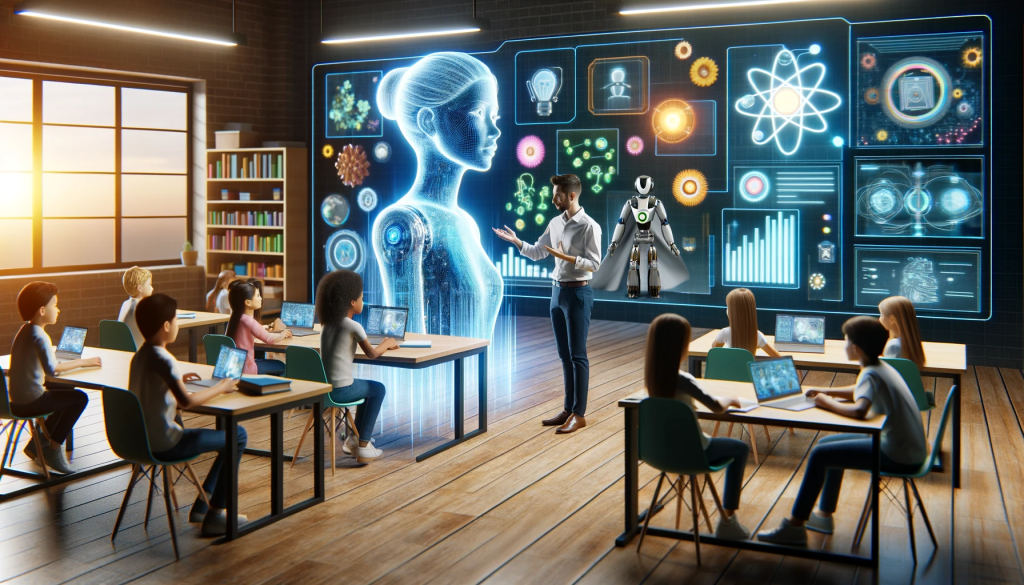
Welcome to the fascinating world of AI in creative arts! As 2023 has shown, artificial intelligence is not just a tool for tech enthusiasts but a revolutionary force in the realm of creativity. From painting and music composition to literature and dance, AI’s influence is reshaping how we create and perceive art.
The Early Days of AI in Creative Arts
Initial Experiments
The journey of AI in the arts began with modest experiments, where algorithms were tested for their ability to mimic human creativity. These early forays laid the groundwork for what was to come.
Key Milestones
Significant breakthroughs soon followed, with AI not only replicating artistic processes but also offering new ways to envision art. This period marked the emergence of AI as a potential partner in creativity rather than just a tool.
AI in Today’s Creative Landscape
AI-Generated Music
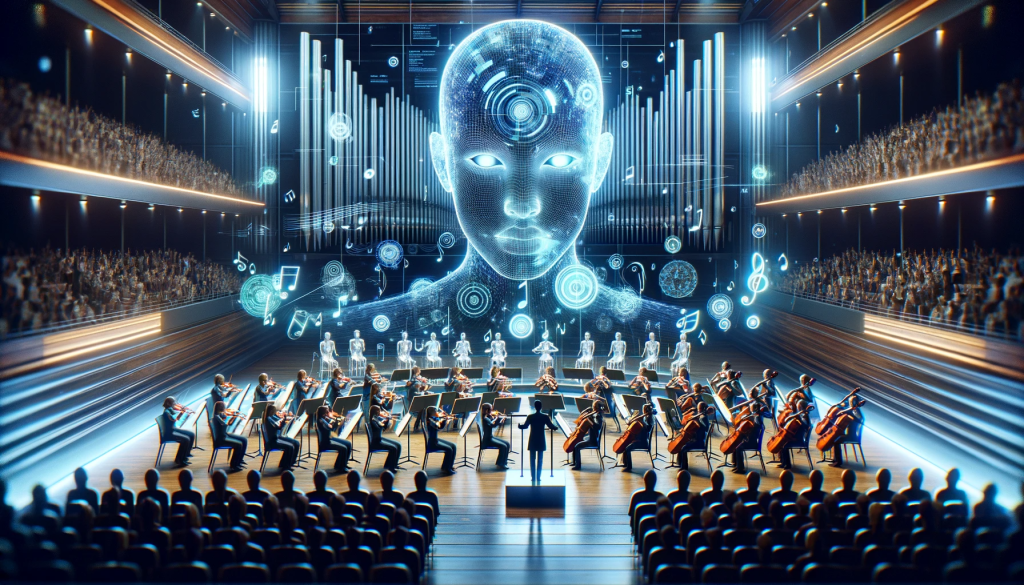
In 2023, AI has significantly transformed the landscape of musical composition, offering artists new platforms for expression and creativity. Let’s elaborate on this section with the latest information and insights:
The Advent of Generative AI in Music
Generative AI has dramatically altered the music composition landscape. Advanced algorithms, after analyzing extensive datasets of musical compositions, can identify intricate patterns and replicate specific artists’ styles. Tools like AIVA represent this evolution, allowing composers to quickly produce music in various styles, thus expanding their creative horizons.
Transformative Impact on Performance
AI technologies, such as Yamaha’s AI Music Ensemble Technology, have revolutionized performances by analyzing human nuances and generating complementary performances in real-time. This innovation blurs the lines between organic and synthetic sounds, creating new ensembles that blend human and AI musicianship.
Collaborative Potential in Music Creation
AI’s role in music extends to analyzing inputs from various sources, including pianos and orchestras, to contribute creatively. This capability has broadened its application to not just accompany human performances but also enhance the performance environment, like lighting and video, thereby creating more immersive experiences.
AI in Music Production
AI-powered tools like Magenta and Orb Producer Suite are transforming music production by generating musical patterns and elements, thereby saving time for producers and musicians. These tools create new music by learning from large datasets of musical compositions, which can be particularly beneficial for independent artists
AI in Literature and Writing
AI’s impact on literature is equally profound, from drafting poetry to generating entire narratives. The line between human and machine creativity in literature is becoming increasingly blurred.
AI in Visual Arts
Technological Milestones in AI Art Creation
- Adobe Firefly and Midjourney v.5: Adobe Firefly has empowered diverse visual content creation, including illustrations and photo manipulation, and is integrated into Photoshop. Midjourney v.5 has elevated image generation with improved efficiency and higher resolution.
- DALL·E 3: This AI model has simplified image generation, eliminating the need for complex prompt engineering. ChatGPT introduced features to help users refine prompts and make image adjustments based on feedback.
- Shutterstock.AI: By integrating AI capabilities, Shutterstock allows users to transform prompts into license-ready imagery, taking a step toward ethical AI.
Artistic Innovation and Collaboration
- Generative Algorithms and Artistic Exploration: Generative algorithms empower artists to venture into uncharted territories, enabling the creation of original artworks and unlocking new realms in artistic styles and techniques.
- AI as a Creative Collaborator: AI algorithms study existing artwork and user preferences to provide insights and ideas that inspire artists, leading to groundbreaking discoveries through a synergy of human creativity and AI analysis

The Impact on Artists and the Art World
Changing Role of the Artist
From Solo Creator to Collaborative Innovator
The integration of AI into the arts has significantly transformed the traditional role of the artist. In this new era, artists are no longer just creators working in solitude but are evolving into collaborators who work hand-in-hand with AI technologies. This shift marks a significant change in how art is conceived and realized.
AI as a Co-Creator and Inspirational Tool
AI serves not only as a tool but also as a co-creator, offering artists new perspectives and inspirations. Artists are using AI to generate ideas, patterns, and even complete pieces that they can further refine, reinterpret, or transform. This collaboration opens up new creative possibilities, allowing artists to push the boundaries of their traditional mediums.
Expanding Creative Horizons
By partnering with AI, artists can explore uncharted territories of creativity. AI algorithms can suggest new combinations of styles, textures, and forms, encouraging artists to experiment beyond their conventional methods. This partnership is especially fruitful in fields like digital art, music composition, and generative design.
Redefining Artistic Identity and Process
The artist’s identity and process are being redefined in this AI-augmented landscape. The interaction with AI compels artists to rethink their approach to creation, blending intuition with algorithmically generated possibilities. This symbiosis challenges artists to integrate and respond to AI outputs in their workflow, adding a new dimension to their creative expression.
Future of AI in the Arts: A 2023 Snapshot
- AI Art Tools: Advances in AI art tools like Dall-E and Adobe Firefly are making it easier for anyone to create detailed and sophisticated artworks. These tools use machine learning to generate images from text prompts, opening up new creative possibilities for artists of all skill levels.
- Generative AI’s Role: Generative AI is becoming a co-creator in the arts, offering novel ways to blend styles and generate unique artworks. This technology is accessible through online platforms, democratizing the art creation process.
- Ethical and Creative Challenges: As AI art gains popularity, it’s raising important questions about copyright and authenticity. The goal is to use AI responsibly, enhancing creativity without overshadowing the human element in art.
- Predicting the Future: While it’s hard to predict exactly how AI will evolve in the arts, its current trajectory suggests a significant impact on creative processes, with an emphasis on maintaining a balance between technological innovation and artistic integrity.
Conclusion
The evolution of AI in the arts is a journey of collaboration, innovation, and exploration. As we look to the future, it’s clear that AI will continue to be an integral part of the creative process, offering new opportunities and challenges. The fusion of human creativity and artificial intelligence is not just about the art that is created but the story it tells about us, our society, and our collective future.
- AI-Powered Training: Redefining Security Protocols
- Generative AI for Mental Health: An Accessible Approach to Therapy
- The 2024 Chatbot Revolution: Voice, Experience, and Automation
- AI Leadership Mastery: Elevating Tech Savvy to Strategic Genius
- DoorDash Dilemma: Unveiling the Need for Enhanced Driver Safety in the Gig Economy
 Subi's Insights
Leave a comment